Response to text:
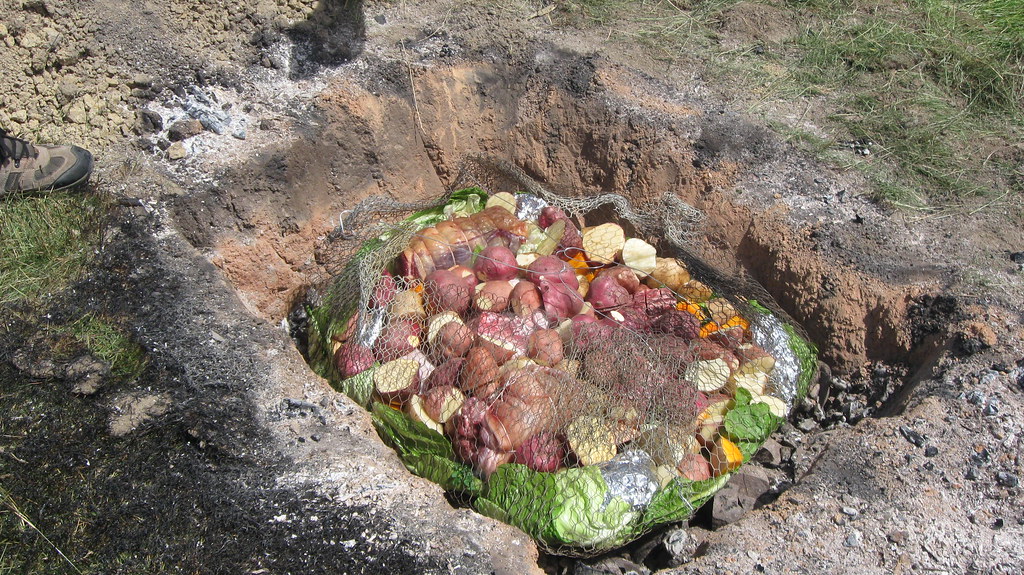
Māori Kai
Highlight the correct answer or write down the appropriate response.
1. A hangi is…
a) a way Maori greet each other b) a type of food
c) an earth oven d) a way of storing food
2. Māori brought these animals with them as a source of food.
a) Pigs b) Cows
c) Dogs d) Sheep
3. Explain how Māori boiled their water
→They first heat the rock up past 100 degrees and place it in the wooden bowl of water to make it hot.
4. True or False: rua kūmara is an elevated storage platform
a) True b) False
5. Which of the following is NOT a species of whitebait?
a) Inanga b) Kōaro
c) Pikopiko d) Kōkopu
6. Why do you think it was important for Māori to store their food underground, or above the ground?
→To keep it away from animals because they might easily eat it.
7. In your own words explain how to build a hangi.
→At the bottom of the hangi pit there are stones that have been heated up more than 100 degrees causing it to make hot steam so it can cook the food. I also didn’t mention that the stones were dipped in a wooden bowl of water to make it hot so it could also help the hot steam.
Response to Text:
Food in Tonga
Highlight the correct answer or write down the appropriate response.
1. Which of the following is NOT an ingredient in Lu?
a) Sipi (lamb) or Pulu (beef) b) Onions
c) Coconut shell d) Taro leaves
2. Which of the following dishes uses fresh fish?
a) Puaka Tunu b) ‘Otai
c) Lu Sipi d) ‘Ota Ika
3. Explain why someone has to stay by the Puaka Tunu and constantly rotate it over heat.
→To be fully cooked and to also let the coconut liquid spread all over it so it can drip everywhere.
4. True or False: “The fruit is grated into small pieces so that it is easier to drink.”
a) True b) False
5. Faikakai Topai is a Tongan dessert. What is it?
a) Brown sugar Donuts b) Coconut Dumplings
c) Deep-fried Donuts d) Sugar Soup
6. When making ‘Otai, explain why people in Tonga might use coconut milk instead of cow's milk.
→They use coconut milk because sometimes cow milk is not available in Tonga.
7. Write what Tongan dishes you would like to try and why.
→I would try Otai and Ota Ika because Otai is made from several different flavours and it tastes really fruity. But the one Otai I would try is Mango because that is the best. Also the reason I want to try Ota Ika is to see if it is different from the rest of the raw fish that other cultures make. Either way it will still be yum.
Response to text:
Landmarks in Tonga
Highlight the correct answer or write down the appropriate response.
1. What is the Trilithon in Tonga known as?
a) Ha'amonga ‘A Maui b) The Burden of Maui
c) Stonehenge of the Pacific d) All of the above
2. Who is the monument in honour of?
a) King Tupou VI and his sons b) Queen Salote and her sons
c) King Tu’itātui and his sons d) Maui and his sons
3. Explain in your own words why the Cave in Eua is called ‘Ana ‘Ahu - the Smoking Cave.
→ A waterfall works its way down in the sinkhole causing a steam cloud that kind of looks like smoke. That is how the Ana’Ahu got its name.
4. True or False:”The Royal Palace has many visitors throughout the year, however they can only look at it from the water.”
a) True b) False
5. The blowholes in Tongatapu shoots waves up to what distance?
a) 40m b) 30m
c) 20m d) It doesn’t shoot blowholes
6. Ha’apai is made up of around 60 uninhabited islands. Explain why many people wouldn’t live on these islands?
→It has a steep sided active volcano on the island that is also a bird sanctuary.
7. Explain what the difference is between natural and man-made landmarks.
→Natural landmarks are when they were just normally like that and it wasn’t built or made by people. Man-made landmarks mean they were made by people and they weren’t normally there on the island when nobody touched it. Like the rock Ha’amonga’a Maui
Response to text:
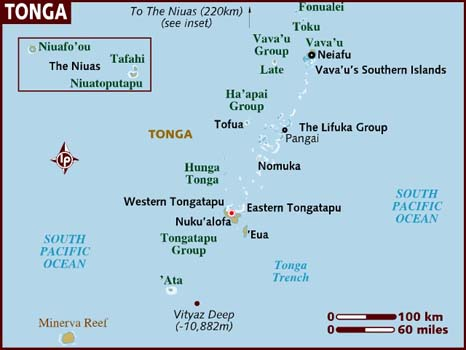
All about tonga
Highlight the correct answer or write down the appropriate response.
1. What ocean is the Kingdom of Tonga located in?
a) Atlantic Ocean b) Indian Ocean
c) Pacific Ocean d) Arctic Ocean
2. Which of the following is NOT a main island group in Tonga?
a) Ha’apai b) Niuatoputapu
c) Vava’u d) Tongatapu
3. Explain this statement in your own words. “This is the only island in the Pacific Nations that is still a monarchy.”
→Tonga is the last island in all of the pacific nations that still has a kingdom with a king and a prime minister.
4. True or False: The highest point in Tonga is on Kai Island in the Vava’u Group, and sits at a height of 1,033 metres.
a) True b) False
5. Which of the following is NOT a main island group in Tonga?
a) Ha’apai b) Niuatoputapu
c) Vava’u d) Tongatapu
6. Anga Fakatonga is the Tongan way of life. Name the four values and explain what they represent.
→Faka'apa'apa,aki means mutual respect. Feveitokai’aki means sharing,cooperating and fulfilment of mutual obligations. Lototoo means humility and generosity. Tauhi Vaha’a means loyalty and commitment.
7. Family is said to be the centre of the four Tongan core values. Explain what this means.
→Religion is very important. Most Tongan families are members of a Christian church. Popular religions are Methodist, Mormon, and Catholic.